Understanding Azure AI Translator
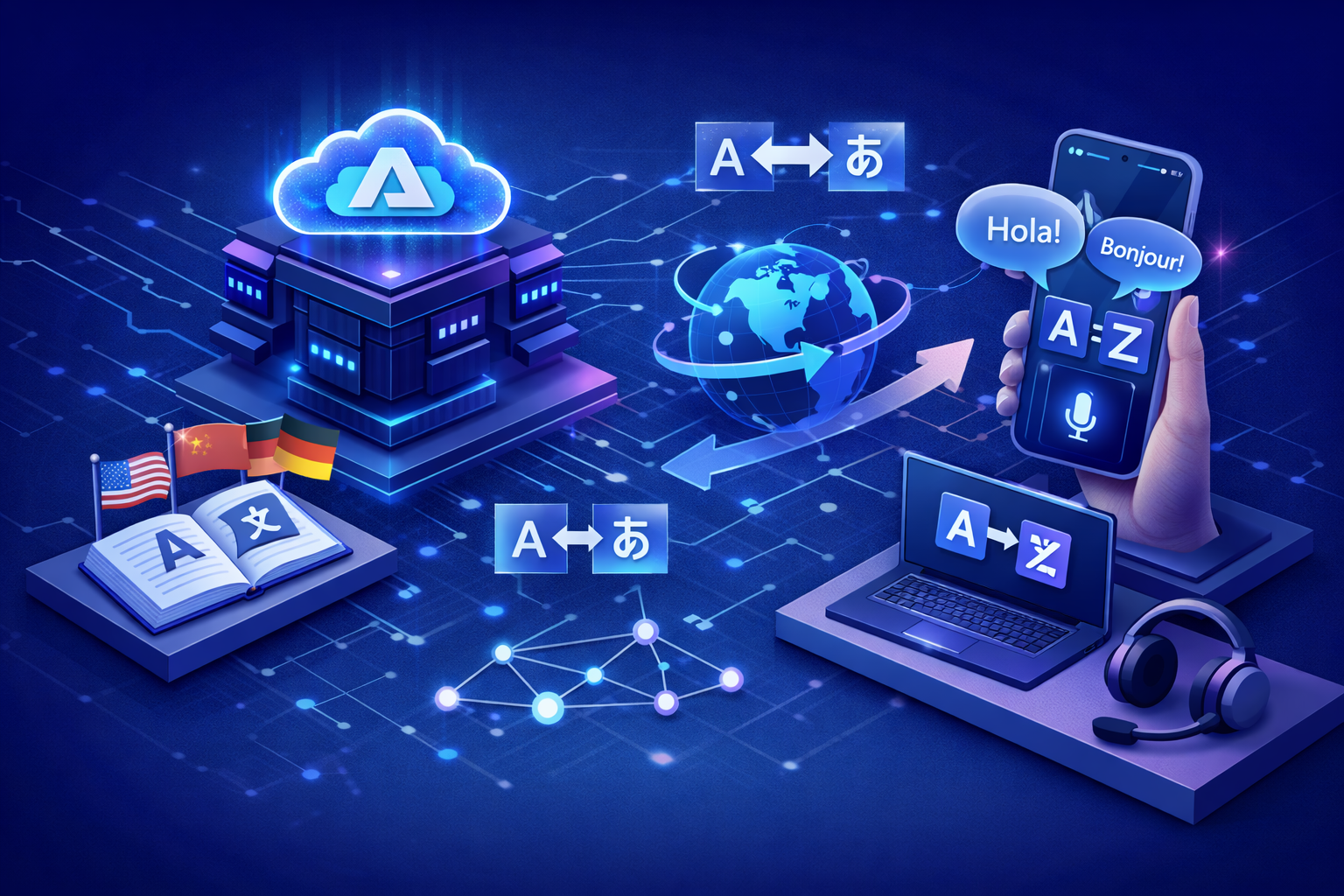
Azure AI Translator is Microsoft Azure’s cloud-based translation service for building multilingual applications and workflows. It enables organizations to translate text and documents using modern neural machine translation capabilities, making it possible to deliver digital experiences that are accessible to users in many languages without relying entirely on manual translation processes. In practical terms, it helps businesses communicate more effectively with customers, partners, employees, and global audiences while keeping multilingual operations scalable and manageable.
In today’s digital environment, language is often one of the biggest barriers to access, service delivery, and market expansion. Businesses may operate globally, but their systems, support channels, websites, product content, and internal knowledge are often created in only one or a few languages. Azure AI Translator helps close that gap by making translation a built-in capability rather than a manual afterthought.
Why Multilingual Capability Matters in Modern Business
Organizations increasingly serve diverse user communities across regions, markets, and cultures. Customers expect websites, support portals, applications, and communications to be available in their preferred language. Employees in multinational organizations need access to information and collaboration tools that are not restricted by language. Public sector institutions, healthcare providers, educational organizations, and global enterprises all face similar challenges when information must move across linguistic boundaries quickly and clearly.
Azure AI Translator matters because it allows organizations to scale multilingual experiences with far greater efficiency than traditional translation-only models. It reduces friction in communication, improves accessibility, supports international growth, and helps digital systems become more inclusive. Rather than translating content one piece at a time through slow manual processes, businesses can embed translation directly into applications, workflows, and content pipelines.
Core Capabilities of Azure AI Translator
Azure AI Translator includes several capabilities that help organizations build production-ready multilingual solutions across a broad range of scenarios.
-Text Translation: Translates text in real time across a wide range of supported languages, making it suitable for applications, websites, chat experiences, and operational systems.
-Document Translation: Translates entire documents in batch workflows while helping preserve structure and usability for business content and multilingual document operations.
-Language Detection: Identifies the source language automatically so applications can respond more intelligently in multilingual environments.
-Custom Translation: Allows organizations to adapt translation output using domain-specific terminology, translation memory, and business-specific language needs.
-Bilingual Dictionary and Transliteration Support: Helps improve translation usability in scenarios where terminology clarity, script conversion, or language guidance is important.
-REST API Integration: Makes it easier for developers to embed translation into enterprise platforms, digital products, and automated workflows.
From Basic Translation to Enterprise Communication Strategy
Translation is no longer only a publishing task. In modern organizations, it is part of digital service delivery, customer engagement, product experience, workforce collaboration, and AI-driven automation. Azure AI Translator supports this shift by helping businesses move from isolated translation tasks to broader multilingual strategies that are integrated into applications and operational processes.
This matters because users do not experience language as a separate function. They experience it as part of the product, the service, the support interaction, or the workflow itself. When multilingual support is built directly into digital systems, communication becomes faster, more inclusive, and more scalable. That is where Azure AI Translator creates lasting business value.
Key Business Use Cases
Website and Application Localization
Organizations can use Azure AI Translator to make websites, portals, and applications accessible across multiple languages without duplicating entire content operations manually. This is especially valuable for global businesses, public-facing services, software platforms, and digital products that need to reach audiences in many markets.
Multilingual Customer Support
Customer service teams often need to respond to inquiries from users who speak different languages. Azure AI Translator can help support multilingual chat experiences, translated support content, and more accessible service interactions. This improves responsiveness and allows organizations to serve broader audiences with greater consistency.
Document Localization at Scale
Many organizations work with high volumes of multilingual documents, including policies, guides, contracts, product materials, forms, and operational documentation. Azure AI Translator supports document translation workflows that help teams scale localization efforts more efficiently while preserving the usefulness of the original files.
Internal Collaboration Across Regions
Multinational organizations often face internal language barriers that slow down collaboration and knowledge sharing. Azure AI Translator can support multilingual communication across teams, training content, internal portals, and shared documentation, helping employees access the information they need more easily regardless of language.
AI and Agentic Multilingual Experiences
As organizations build AI assistants, copilots, and goal-driven agents, multilingual capability becomes even more important. Azure AI Translator helps these systems communicate across languages, making it easier to support users in global and multilingual environments without building separate experiences for every language combination.
Text Translation as a Core Digital Capability
Text translation remains one of the most important functions of Azure AI Translator because text is at the center of so many digital experiences. User interfaces, support conversations, notifications, product descriptions, knowledge bases, operational messages, and business content all depend on language. When organizations can translate this content reliably and at scale, they improve access to information and reduce the friction that language differences create.
In practical application design, text translation often becomes a foundational capability that enables multilingual chatbots, knowledge portals, service desks, product experiences, and digital collaboration tools. It is not simply a convenience feature. It is an important enabler of broader accessibility and business reach.
Document Translation and Operational Efficiency
Document translation introduces another important dimension because many enterprises rely on large volumes of files that need to be shared across language boundaries. Contracts, technical manuals, compliance materials, onboarding packages, public communications, and reports can all become bottlenecks if they must be translated manually one by one. Azure AI Translator helps organizations address this challenge by supporting scalable document translation workflows.
This is especially valuable when speed matters. Businesses expanding into new markets, supporting multilingual operations, or distributing time-sensitive documentation need solutions that can handle volume without sacrificing consistency. By making document translation part of an automated workflow, organizations can reduce operational burden and improve time to delivery.
Customization and Terminology Control
One of the most important realities in enterprise translation is that generic translation is not always enough. Many organizations use industry-specific language, regulated terminology, branded wording, and internal standards that must be reflected consistently across multilingual content. Azure AI Translator supports this need through customization capabilities that allow businesses to align translation output more closely with their own linguistic requirements.
This capability is especially valuable in sectors such as healthcare, legal services, finance, manufacturing, technology, public sector operations, and product localization. When terminology consistency matters, customization helps organizations move from acceptable translation to business-ready translation that fits their real operating environment.
How Azure AI Translator Fits into the Azure AI Ecosystem
Azure AI Translator becomes even more powerful when it is integrated with other Azure services. In many enterprise architectures, it acts as the multilingual communication layer within a broader intelligent application design.
-Azure AI Language: Supports text analysis, classification, summarization, and language understanding before or after translation workflows.
-Azure AI Speech: Extends multilingual solutions into voice scenarios through speech recognition, translation, and spoken output experiences.
-Azure OpenAI Service: Enables generative AI solutions that can create, summarize, or transform multilingual content in combination with translation workflows.
-Azure AI Foundry: Provides the broader platform for building, evaluating, and governing intelligent applications that include translation capabilities.
-Azure AI Agent Service: Allows intelligent agents to operate across languages and support multilingual user interactions and workflows.
-Azure AI Search: Helps organizations retrieve multilingual content more effectively when translation and search need to work together.
-Azure AI Document Intelligence: Extracts content from documents before it is translated, classified, or routed within multilingual processes.
-Azure Monitor, Key Vault, and Microsoft Entra: Strengthen observability, security, secrets management, and access control across production deployments.
Architecture Considerations for Production Solutions
A production-ready translation solution requires more than sending text to a translation endpoint. Teams should think carefully about source content types, latency expectations, real-time versus batch processing, terminology requirements, language coverage, workflow integration, human review needs, and downstream usage of translated content. These decisions affect both technical reliability and business usefulness.
In many enterprise architectures, Azure AI Translator is connected to websites, support systems, content pipelines, document repositories, internal portals, or AI-driven applications. Some scenarios require instant translation for live user interaction, while others require batch document processing or translation embedded into automation workflows. The architecture should reflect the communication needs of the business, not only the technical capability of the service.
Security, Governance, and Trust in Multilingual Systems
Translation workflows often involve sensitive information such as customer communications, contracts, policies, internal documentation, legal content, and operational records. For that reason, Azure AI Translator should be implemented as part of a secure enterprise architecture. Identity management, secure integration, role-based access, secrets protection, and monitoring all contribute to making multilingual systems trustworthy and production-ready.
Governance matters as well. Organizations should define how translated content is reviewed, where automated translation is appropriate, how regulated terminology is handled, and when human validation is required. The goal is not only to translate content faster, but to do so in a way that aligns with business standards, brand expectations, and compliance requirements.
Best Practices for Azure AI Translator Adoption
-Start with High-Impact Multilingual Scenarios: Focus first on experiences where language access directly affects customer reach, employee productivity, or service quality.
-Differentiate Real-Time and Batch Needs: Choose the right pattern depending on whether the solution requires live interaction, document pipelines, or scheduled localization workflows.
-Use Custom Translation Where Business Language Matters: Adapt translation outputs to fit domain-specific terminology, preferred wording, and enterprise style requirements.
-Integrate Translation into Broader Workflows: Treat multilingual support as part of the application or business process rather than as a disconnected add-on.
-Define Review and Quality Controls: Keep appropriate human validation in place for regulated, customer-facing, or high-risk content.
-Design for Global Scalability: Consider language expansion, regional requirements, cost management, and performance from the beginning.
Common Challenges Organizations Should Address
Although Azure AI Translator can significantly improve multilingual operations, organizations should still plan for real-world challenges such as specialized terminology, cultural nuance, content quality variation, mixed-language inputs, review requirements, and integration complexity. These are normal challenges in enterprise translation and should be addressed through strong design and governance rather than unrealistic assumptions about one-click perfection.
Another challenge is treating translation as only a technical output instead of part of the user experience. A multilingual solution succeeds not just because the words are converted into another language, but because the resulting communication remains clear, useful, trustworthy, and appropriate for the intended audience. Strong multilingual experiences require both technical capability and thoughtful content strategy.
The Strategic Value of Azure AI Translator
Azure AI Translator delivers strategic value by helping organizations communicate beyond language boundaries without multiplying operational complexity. It supports international growth, stronger customer engagement, more inclusive digital experiences, and more effective knowledge sharing across regions and teams. In a global and digital-first economy, this capability is increasingly central to how organizations scale.
For many businesses, translation is no longer only a localization requirement. It is a core part of accessibility, service delivery, and intelligent application design. When multilingual experiences are built directly into digital systems, organizations become better equipped to serve global audiences with consistency and confidence.
The Future of Multilingual AI in Azure
The future of Azure AI Translator is closely connected to the rise of intelligent, multimodal, and agent-driven applications. As more organizations build AI assistants, global support systems, multilingual copilots, and localized digital platforms, translation will become even more embedded in how software communicates. Enterprises will increasingly expect translation to work across text, documents, voice, workflows, and intelligent agent interactions as part of a unified AI strategy.
Azure AI Translator is well positioned for this direction because it already supports real-time translation, batch document workflows, and customization within the broader Azure and Foundry ecosystem. As multilingual communication becomes a standard expectation rather than a specialized feature, translation services will play an even more central role in digital transformation.
Conclusion
Azure AI Translator is helping organizations scale multilingual experiences with confidence by enabling real-time text translation, document translation, customization, and seamless integration into modern applications and workflows. It allows businesses to reduce language barriers, improve accessibility, and communicate more effectively across markets, regions, and user communities. For organizations seeking to build inclusive, global, and production-ready digital experiences, Azure AI Translator represents a powerful and strategic capability within the Microsoft Azure AI ecosystem.